Hunter Quintal Headshot

Hunter Quintal

About Me

I am a geoscientist interested in improving decision quality with risk assessments that robustly quantify uncertainty in complex systems. My portfolio includes helping to develop ExxonMobil’s technology for probabilistic interpretation and developing Munich Re's view of risk for inland flood hazards.

My graduate research includes creating catalogs of extreme heat and precipitation events, improving extreme weather event forecasting, and modeling flood hazards under climate and land use scenarios.

My integrated view of risk is informed by over a decade in training across climatology, meteorology, hydrology, geology, and hydrogeology. I approach environmental challenges with a diverse set of quantitative tools and am particularly interested in temporal geostatistics, extreme value analysis, time series analysis, causal inference, predictive modeling, and hydrologic and hydraulic modeling.

Projects

Extreme Precipitation Event Catalog
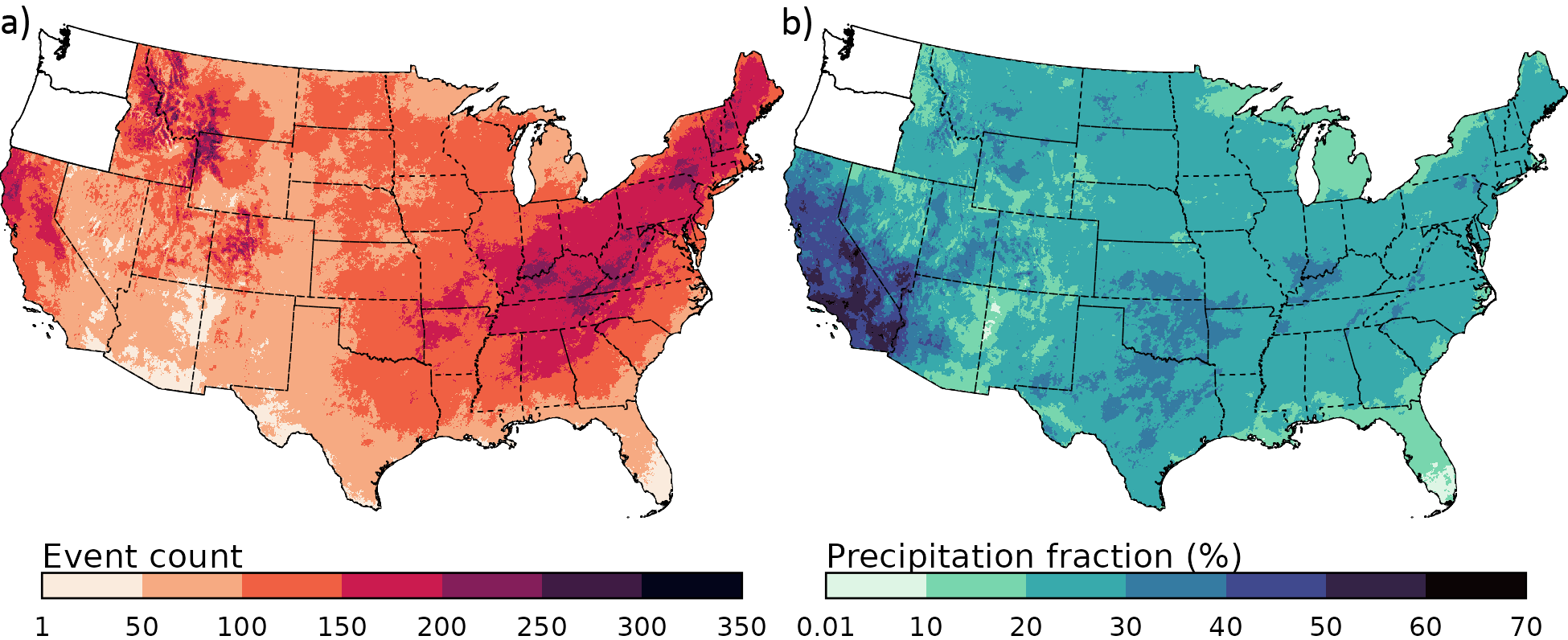
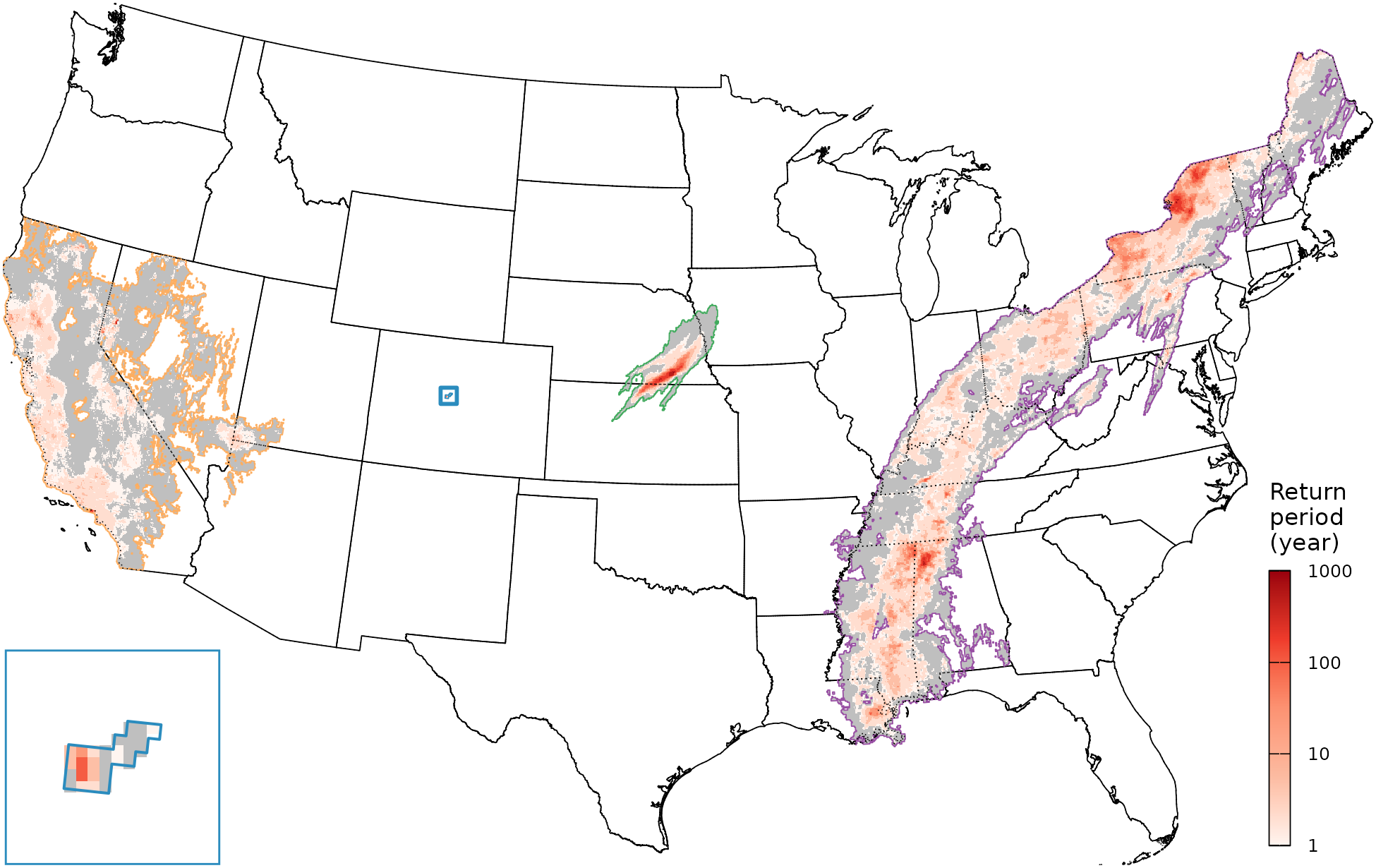
Storm footprints
Spatial count of extreme precipitation events across the United States from 2002-2025.
Storm types
Examples of extreme precipitation events across four different scales of meteorological organization.

We present a novel catalog of space- and time-evolving storms containing extreme precipitation from 2002 to 2025 across the Continental United States (CONUS). This work has been submitted to the Journal of Hydrometeorology.
Read the preprint.
Explore the database.

Covariance-Informed Spatiotemporal Clustering
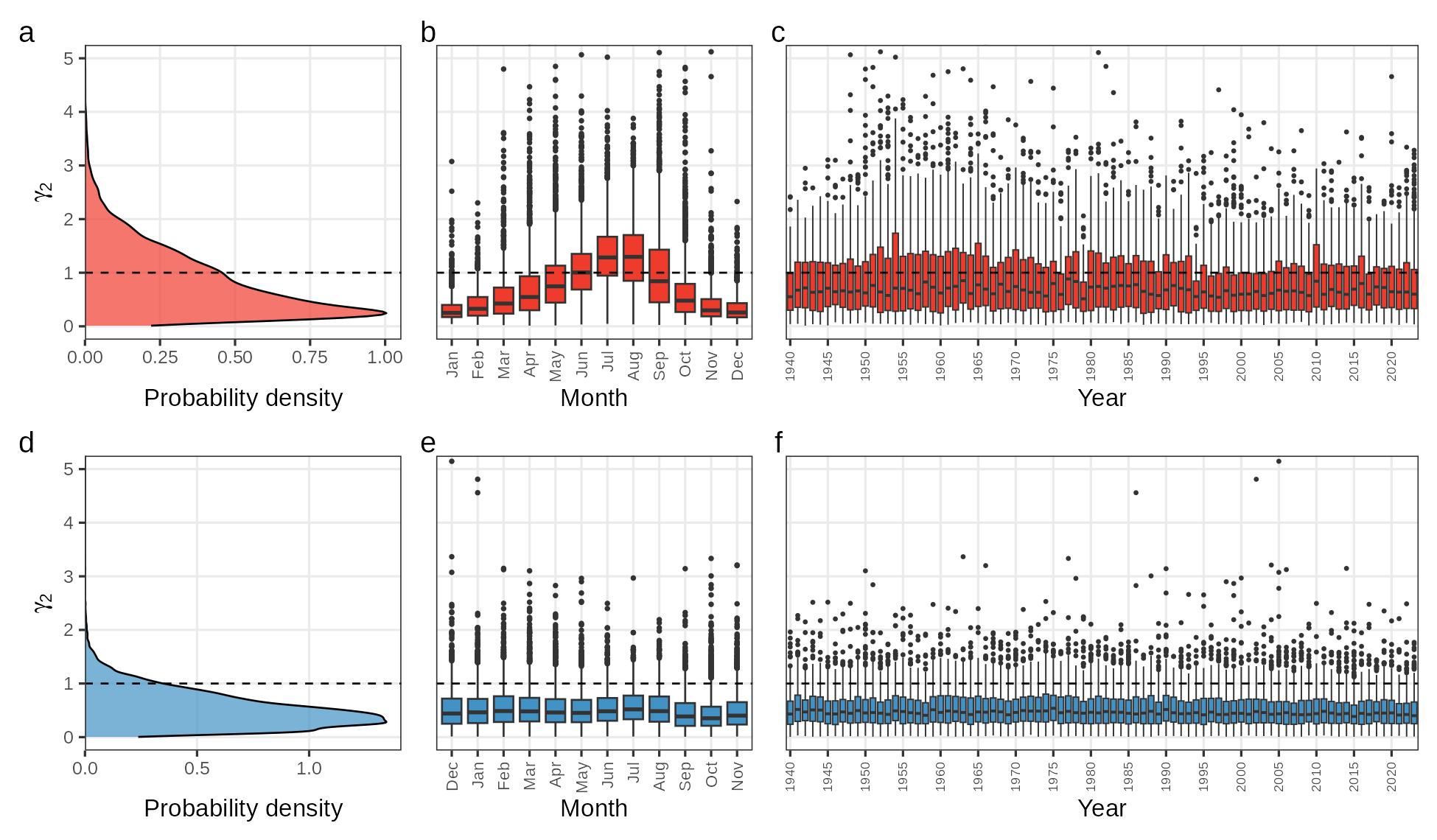
Space time metrics
Space time metrics quantifying daily variability in heat index and precipitation across the Southeastern United States.

We propose a novel modeling framework for resampling any geophysical dataset to the resolution of its geophysical fluctuation. This work has been published in the Journal of Hydrologic and Earth System Sciences.
Read the paper.

Modeling the UK's Infamous 1976 Heatwave in a 2026 Climate
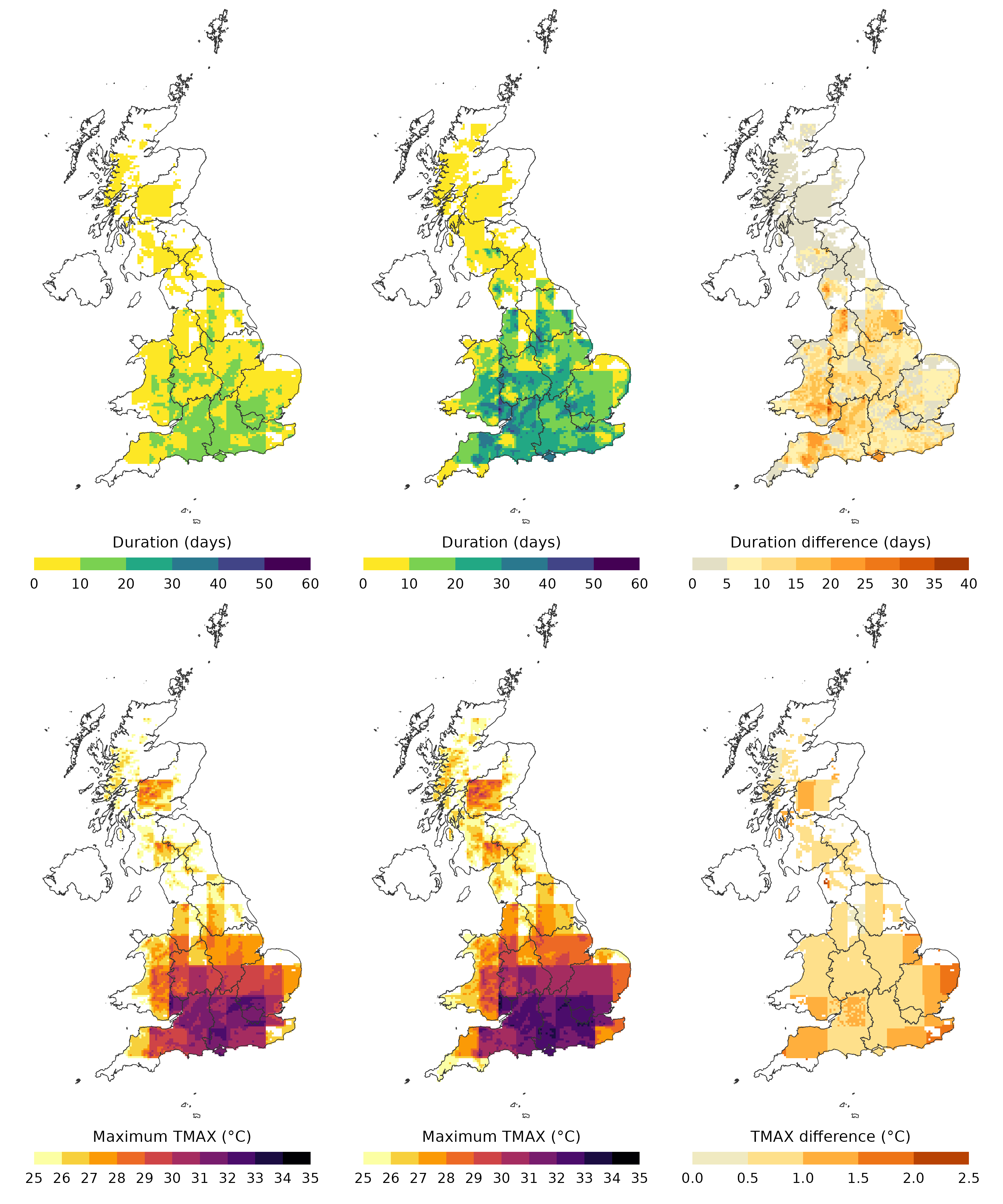
UK 1976 Heatwave in 2026
Spatial duration and intensity of the 1976 heatwave in 1976 and 2026.

To commemorate the 50-year anniversary of the UK's most infamous heatwave, I helped visualize how much worse this event would have been in today's climate during a research visit to Newcastle University in the summer of 2026.

Media Coverage